(203) 550-1846
 rwinsulation@gmail.com
Commercial Insulation
Every commercial building needs insulation — not just homes. Whether you own a warehouse, run a business out of an office building, or manage an agricultural or industrial structure, spray foam insulation is one of the most effective ways to control energy costs, protect the building envelope, and create a more comfortable environment for employees, customers, and stored inventory alike.
Spray foam insulation is widely considered the most energy-efficient insulation technology available for commercial applications, and it delivers benefits that go well beyond temperature control.
Why Insulate a Commercial Building
Lower energy costs. Commercial buildings often have large, uninsulated wall and roof assemblies — think of a steel-frame warehouse or a pole barn — that lose or gain heat rapidly. Sealing that envelope with spray foam can reduce energy consumption significantly, with typical savings of up to 40% on heating and cooling costs.
Better indoor air quality. Spray foam’s complete air seal keeps outside allergens, dust, and pollutants from infiltrating the building, and because it doesn’t provide an organic food source the way some traditional insulation materials can, it doesn’t support mold growth.
Pest control. A fully sealed building envelope closes off the small gaps and entry points that rodents and other pests use to get inside — an important consideration for any facility storing inventory, equipment, or food products.
Noise reduction. Spray foam’s dense, sound-dampening structure reduces noise transfer from outside traffic, equipment, or neighboring units, which matters for offices, medical facilities, and any workplace where a quieter environment improves productivity.
Structural benefits. Closed-cell spray foam in particular adds rigidity to a building’s wall and roof assembly, which is especially valuable in metal and steel-frame structures that are prone to thermal movement and condensation.
Open-Cell vs. Closed-Cell for Commercial Applications
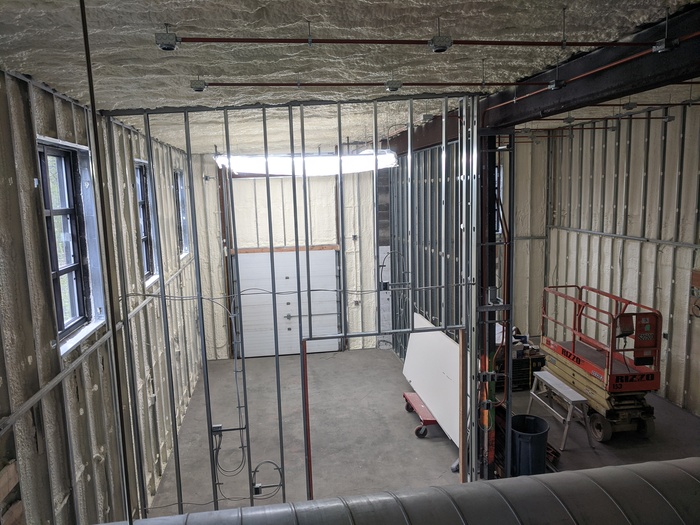
As with residential projects, we select open-cell or closed-cell spray foam based on the specific building and application. Closed-cell foam’s higher R-value per inch, added structural rigidity, and built-in vapor barrier make it the preferred choice for metal building roofs and walls, below-grade areas, and any application where condensation control is critical — condensation on the interior of an uninsulated metal roof is one of the most common and costly problems in steel-frame buildings. Open-cell foam is a cost-effective option for large interior volumes and partition walls where sound attenuation and air sealing are the priority rather than moisture control.
Buildings and Facilities We Serve
Warehouses and distribution centers — large open volumes with steel framing that benefit from full envelope air sealing and condensation control.
Agricultural buildings — barns, pole barns, and equipment storage structures where temperature swings can affect livestock, feed, or equipment.
Offices and retail spaces — where consistent comfort and lower operating costs directly affect the bottom line.
Other commercial and industrial structures — from workshops to manufacturing space, wherever a tighter building envelope adds value.
The Commercial Insulation Process
Every commercial project starts with an on-site assessment, so we can evaluate the building’s construction, current insulation (if any), and the specific problem areas driving up your energy costs — whether that’s an uninsulated metal roof, exterior walls, or gaps around loading docks and large doors. From there, we provide a free, detailed estimate before any work begins. Spray foam products used in commercial applications are manufactured to meet applicable building and fire-code requirements, and our crew installs to those code requirements on every job, regardless of the size of the building.
Minimizing Disruption to Your Business
We understand that a commercial insulation project has to work around your operating schedule, not the other way around. Our team plans each project’s scope and timeline with your business hours in mind, and we carry the right safety equipment and protective gear to complete the work efficiently and professionally on a job site that’s still operating.
Return on Investment
Unlike many building upgrades, spray foam insulation starts paying for itself the moment your heating and cooling systems run less to maintain the same temperature. The exact payback period depends on the size of the building, its current insulation levels, and local energy costs — but for most commercial properties, the combination of lower monthly utility bills, reduced HVAC wear, and fewer moisture- or pest-related repairs makes spray foam one of the more predictable investments a property owner or business can make in their building.
Why Businesses Choose Right Way Insulation
The Right Way Construction LLC is a fully licensed and insured insulation contractor serving Fairfield County, New Haven County, and Litchfield County in Connecticut, as well as Westchester County, New York. Our team has the experience, training, and equipment to install spray foam insulation correctly on projects of any size, and we build the kind of professional relationships with property owners and contractors that lead to repeat work. We provide a free consultation and a free estimate for every commercial project, and we stand behind the quality of our installation and our service from the first site visit through project completion.
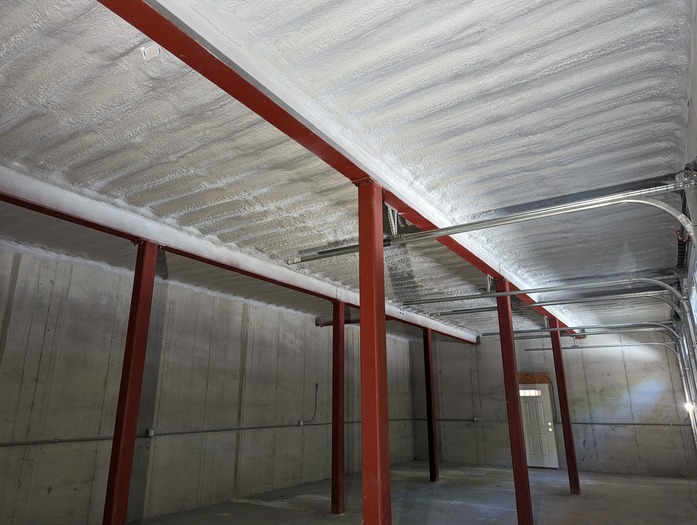
Warehouse
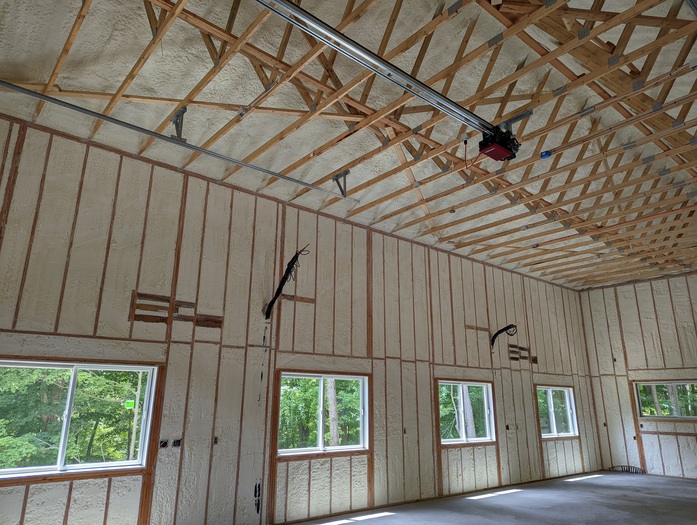
Agriculture buildings
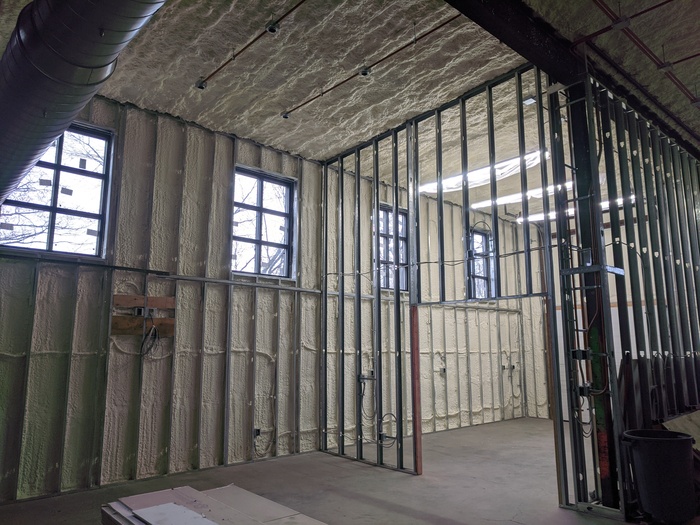
Offices
Other commercial structures
To discuss your foam insulation needs and get a free estimate,
call us at (203)550-1846 or fill out the form
Frequently Asked Questions
What types of commercial buildings can be insulated with spray foam?
We insulate warehouses, agricultural buildings, offices, retail spaces, and other commercial structures, for both new construction and retrofit projects.
Will spray foam insulation disrupt our business operations?
We schedule commercial projects to minimize disruption, including after-hours or phased work for occupied buildings.
How does spray foam insulation reduce commercial energy costs?
Spray foam seals air leaks that standard insulation leaves open, which can reduce utility costs by up to 40% in buildings like warehouses and agricultural structures.
Does spray foam insulation meet commercial building and fire codes?
Yes. Spray foam products used in commercial applications are manufactured to meet relevant building and fire code requirements.
What is the typical payback period for commercial spray foam insulation?
Payback period depends on building size, current insulation levels, and local energy costs. Many commercial properties see a return on investment within a few years.
Do you offer free estimates for commercial insulation projects?
Yes, we provide a free, no-obligation estimate for commercial projects of any size, including new construction and retrofits.
Nearby Towns We Serve: Stamford, CT · Greenwich, CT · Darien, CT · New Canaan, CT · Norwalk, CT · Westport, CT · Fairfield, CT · Wilton, CT · Ridgefield, CT · Weston, CT — See all service areas →